The physics of the
red blood cell.
I am a doctoral researcher in experimental soft-matter and biological physics. I work from the mechanics of a single cell to the collective patterns of a billion, through in vivo microscopy, image analysis, and physical modelling.
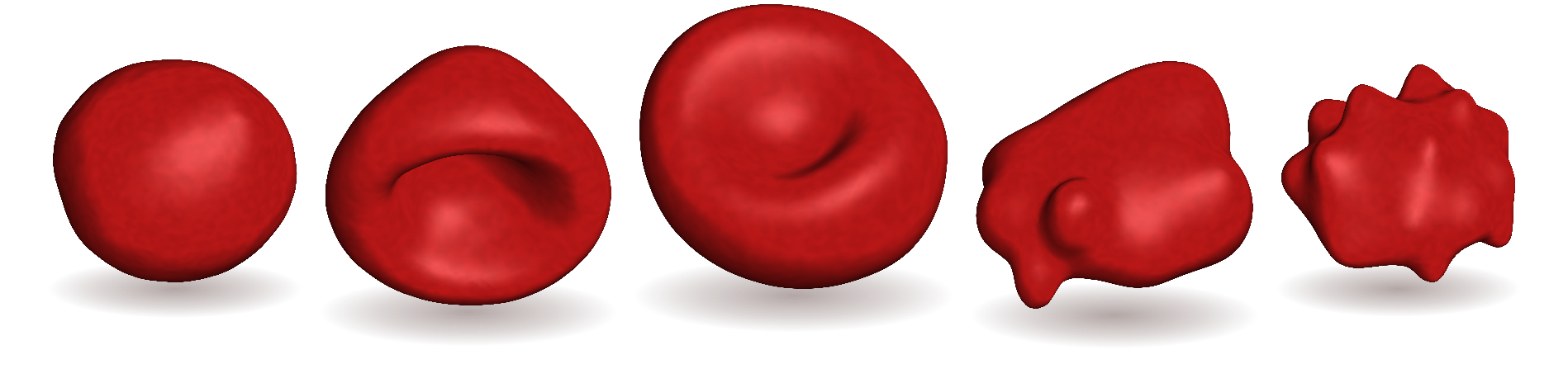
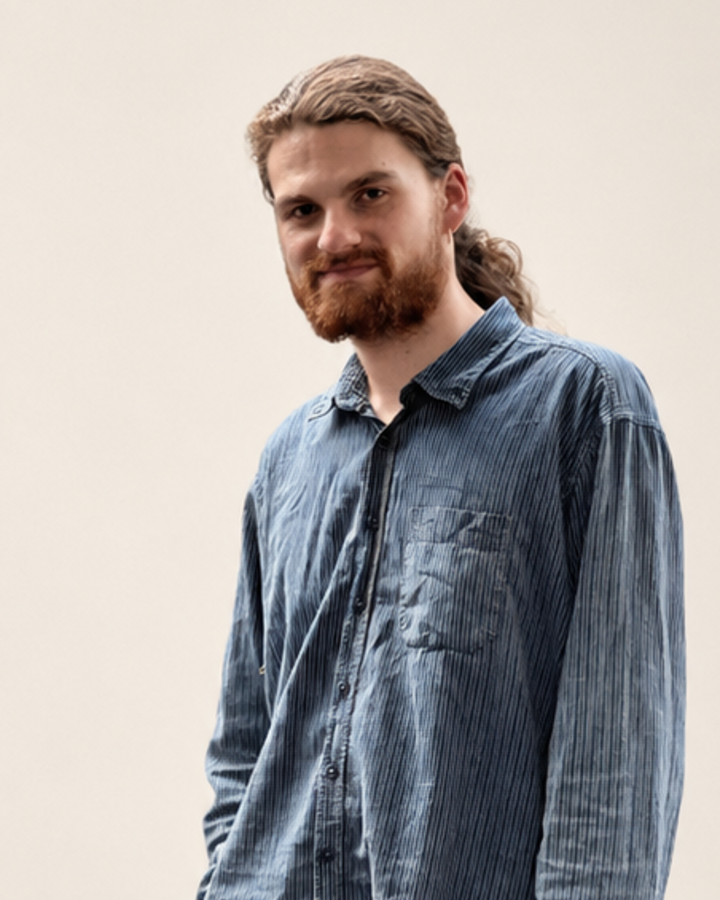
A physicist among the erythrocytes.
Since 2022 I have pursued a doctorate (Dr. rer. nat.) in the group of Prof. Christian Wagner at Saarland University, following a Master’s on the sedimentation of erythrocytes in colloidal silica density gradients. My work turns messy, real-world microscopy into quantitative physics: detection and tracking pipelines, 2D/3D image segmentation, shape analysis, and predictive models of how red cells move, deform, and organise.
The doctoral position is funded through a Young Investigator Grant secured by Dr. Alexis Darras. In 2025 the work received the Best Poster Award at the Annual European Rheology Conference (AERC) in Lyon.
Python
C++ / CUDA
Image analysis
Embedded systems








From one cell to a billion.
A selection of the questions I work on. Each figure is drawn from the corresponding study; sources are cited beneath.

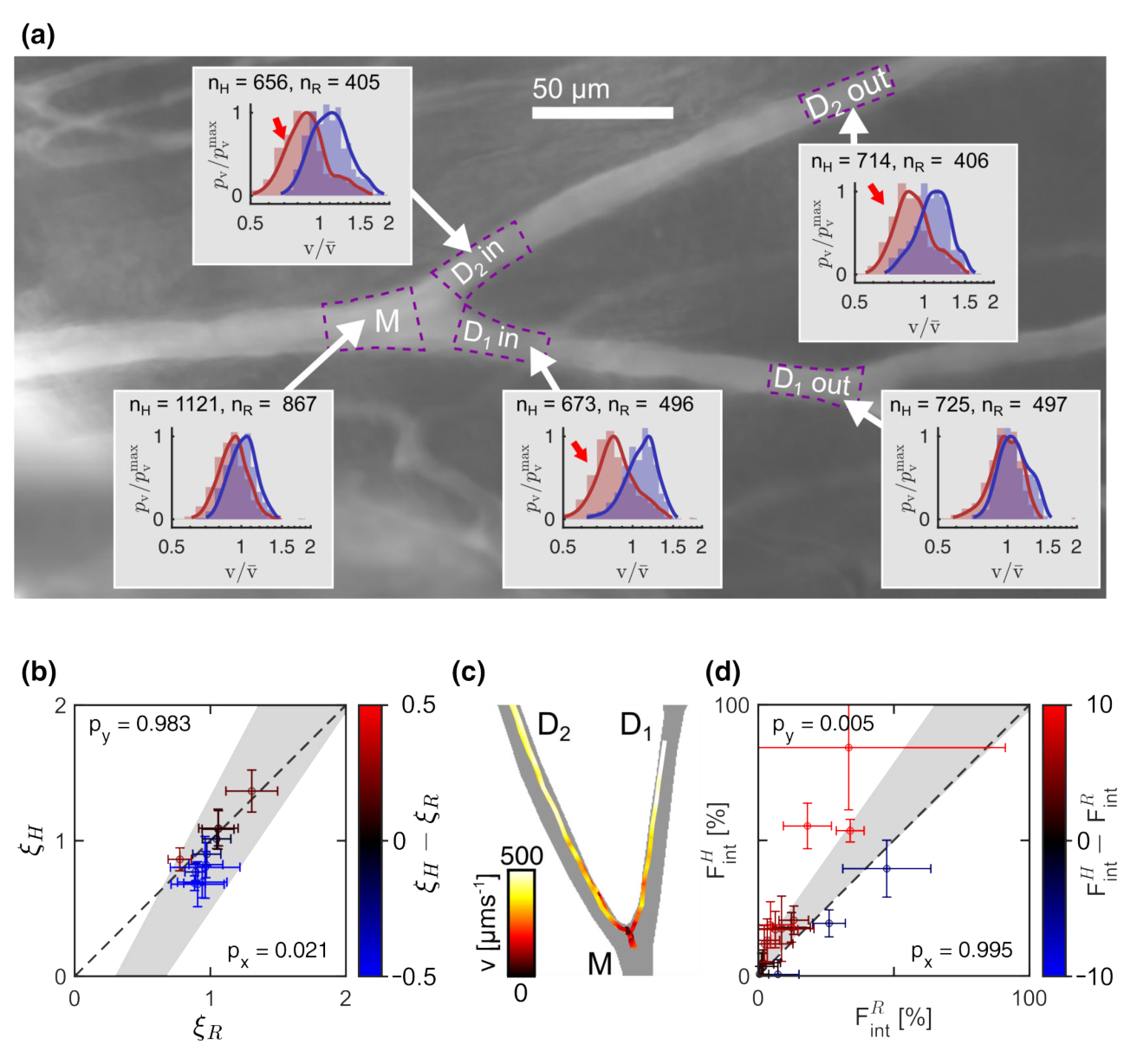
Cells in vivo: rolling, lingering and partitioning
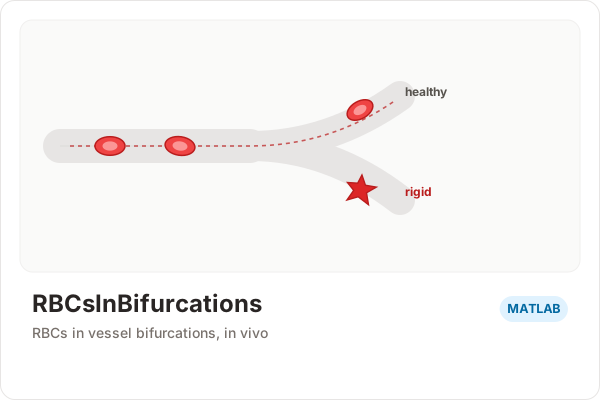
Building detection and tracking pipelines for messy, real intravital microscopy. In one line of work, white blood cells are classified as rolling or flowing along the vessel wall and followed through bifurcations. In another, healthy and artificially rigidified red cells are compared through the flow and geometry of the junction: rigid cells linger less at the branch apex, shifting how blood partitions between daughter vessels, a mechanism relevant to malaria and sickle-cell disease. My contribution: video processing, the tracking pipeline, data analysis, statistics and figures.
White blood cells: ongoing investigations with Khadija Larhrissi, AG Wagner.
Rigid versus healthy red cells: Rashidi*, Maurer*, Wrublewsky*, Larhrissi, John, Gidley, Toye, Kaestner, Wagner, Laschke, Darras. Biophysical Journal (2026). doi:10.1016/j.bpj.2026.03.023

Band patterns in density gradients
When red cells are centrifuged they settle into discrete stripes. For decades these bands were read as a sign of discontinuous cell ageing. We developed a continuity equation with aggregation and showed that the bands instead arise from a competition between cell aggregation and net buoyancy, the same class of physics that patterns bird flocks and zebra stripes. Related work explains the classic Percoll-gradient bands and their limits for age separation.
Maurer, Romero, Lerch, John, Kaestner, Wagner, Darras. PNAS 122(51), e2515704122 (2025). doi:10.1073/pnas.2515704122
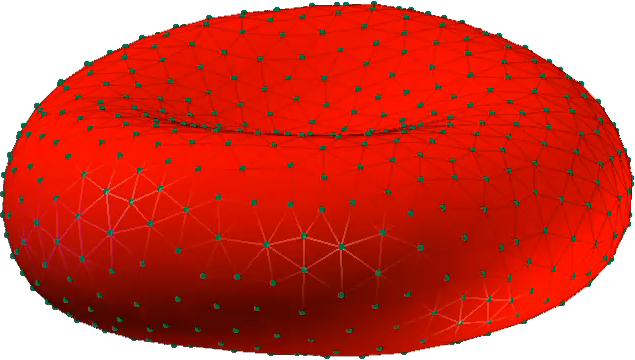
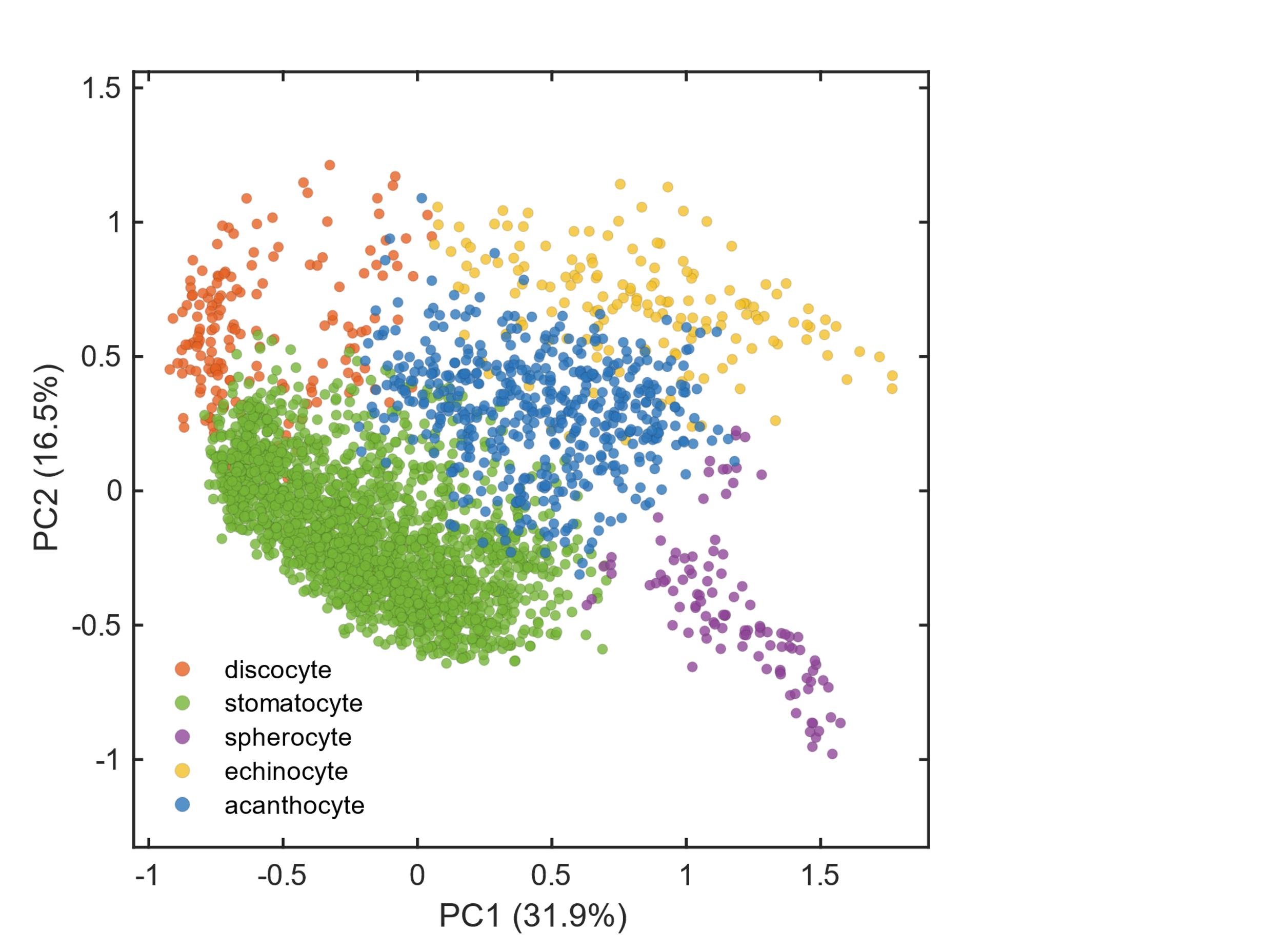
3D phenotyping of red-cell shape
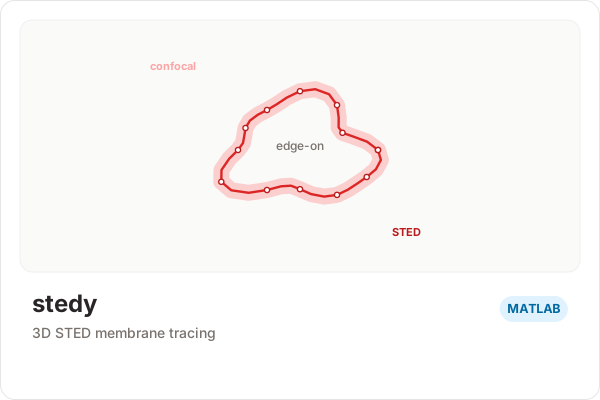
Surfaces extracted from confocal and STED stacks are smoothed by Willmore curvature flow and decomposed into spherical harmonics, placing each cell along the stomatocyte, discocyte and echinocyte axis. A random-forest classifier reaches 92% accuracy across 730 cells, a quantitative language for distinguishing health and disease conditions where humans, and simpler maths, cannot. Developed together with research colleague Nikolas Lerch.
Building on the 3D red-cell phenotyping of Simionato, Quint et al. AG Wagner, Saarland University.
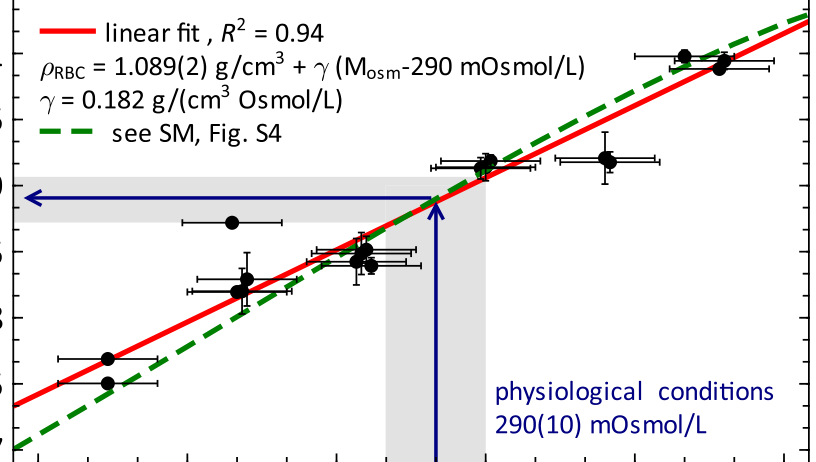
Cytosol viscosity and density
Buoyant-density centrifugation maps the red-cell density distribution and, through the cytosol viscosity to density relation, its intracellular viscosity. This gives realistic single-cell inputs for blood-flow models.
John, Kretsch, Maurer, Recktenwald, Kaestner, Wagner. Biophysical Journal 124(16) (2025). doi:10.1016/j.bpj.2025.07.002
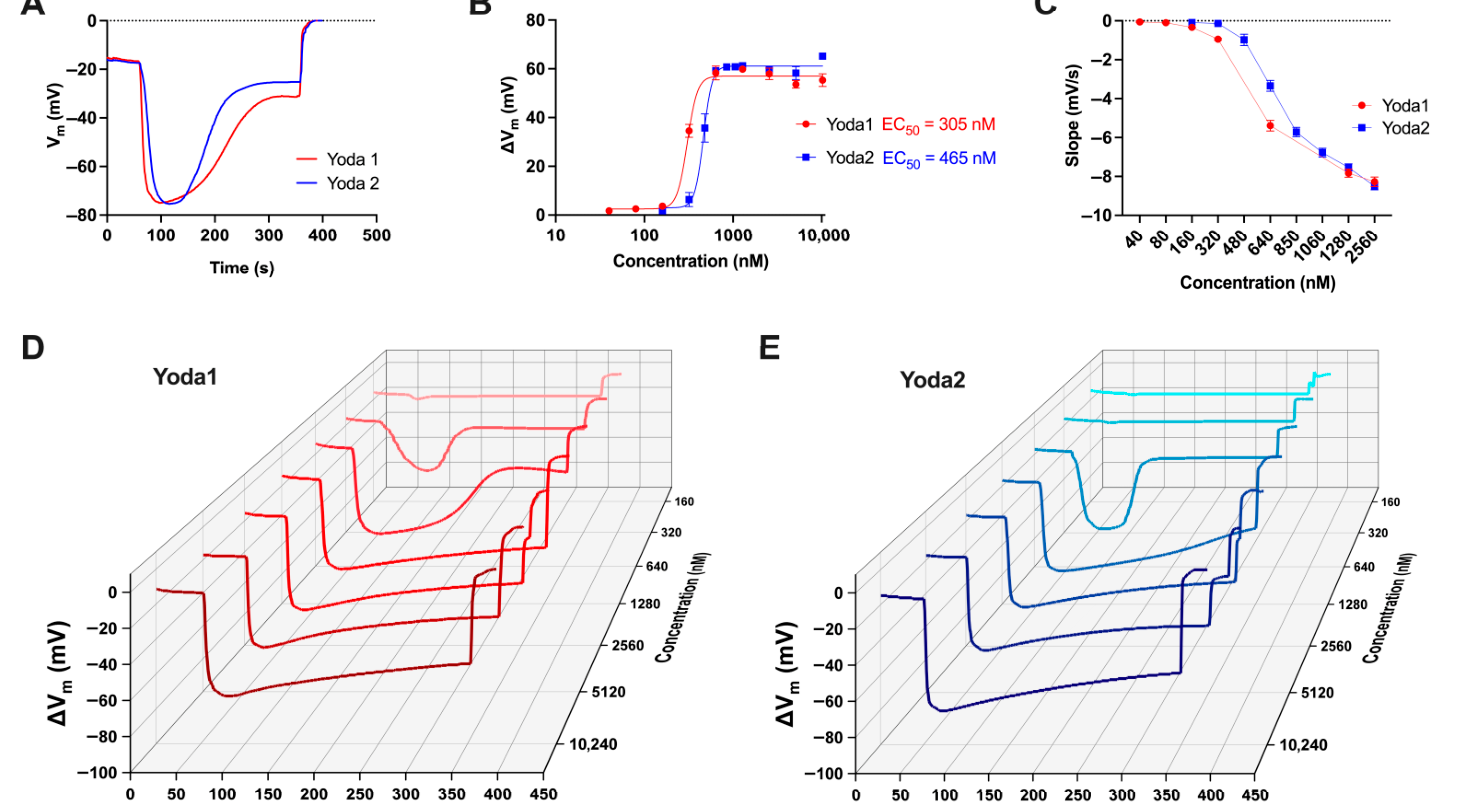
Piezo1 activators: Yoda1 vs Yoda2
Automated patch clamp and calcium imaging compare how the chemical activators Yoda1 and the newer Yoda2 open the mechanosensitive Piezo1 channel in red cells, a practical reference for using these tools.
Qiao, Penttinen, Coli, Murciano, Maurer, Wagner, Rotordam, Kaestner. Biomolecules 15(8), 1110 (2025). doi:10.3390/biom15081110
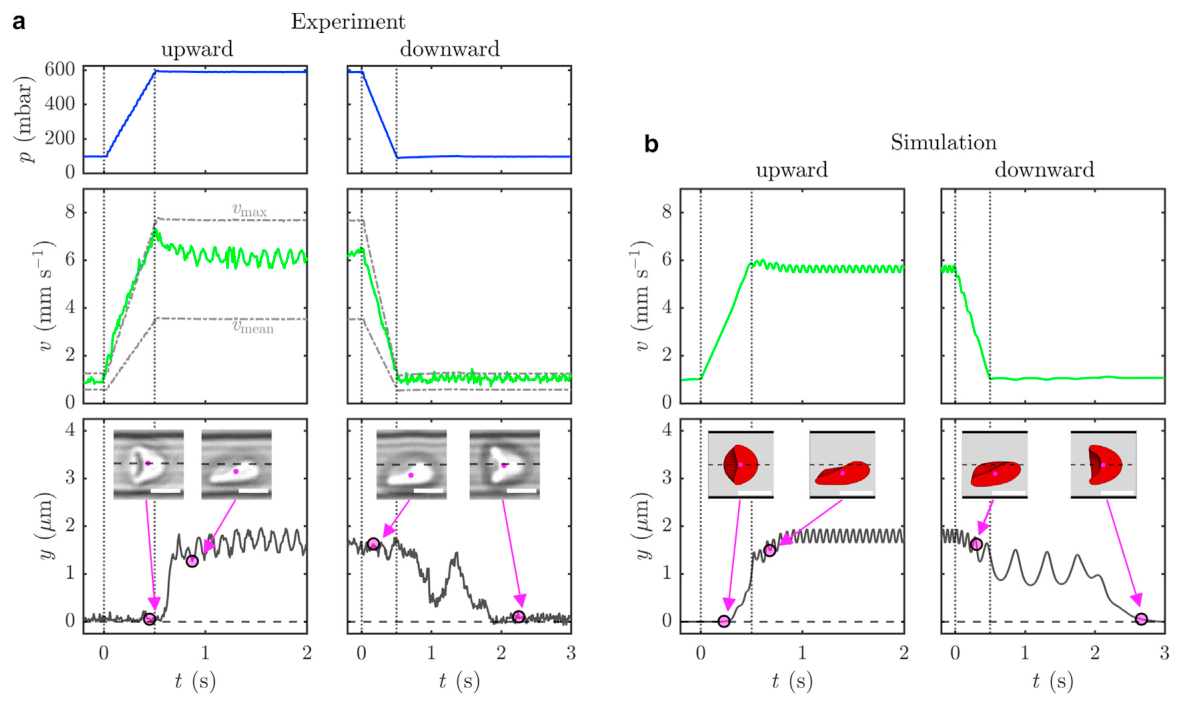
Croissants and slippers in flow
In capillary flow red cells adopt symmetric croissant or off-centred slipper shapes. Under time-dependent flow the croissant to slipper transition is far faster than the reverse, set by the flow ramp rate, tracked in a comoving frame with a custom PID microscope stage.
Recktenwald*, Graessel*, Maurer, John, Gekle, Wagner. Biophysical Journal 121(1) (2022). doi:10.1016/j.bpj.2021.12.009
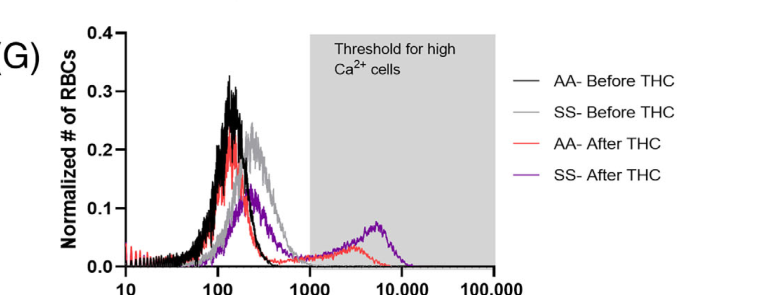
THC and sickle red cells
Δ⁹-THC (cannabis) activates red-cell cation channels, raising intracellular calcium and driving dehydration and shape change. After THC, a large fraction of sickle cells crosses into the high-calcium range. A translational caution that cannabis may harm red cells in sickle-cell disease.
Hatem*, Esperti*, Murciano*, Qiao*, … Maurer, … Egée. American Journal of Hematology 98(12) (2023). doi:10.1002/ajh.27109
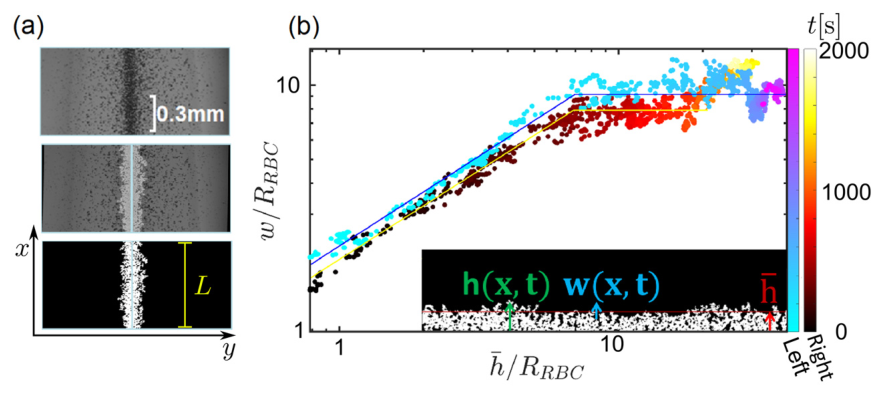
Drying droplets and edge growth
A drying drop usually leaves a coffee ring. At low red-cell concentration the deposit instead grows from a central edge, quantified through interface growth and roughness scaling, relevant to blood-drop diagnostics.
Sardari, Mohammadian, Asfia, Maurer, Örüm, … Darras. J. Colloid Interface Sci. 679(A) (2025). doi:10.1016/j.jcis.2024.10.039
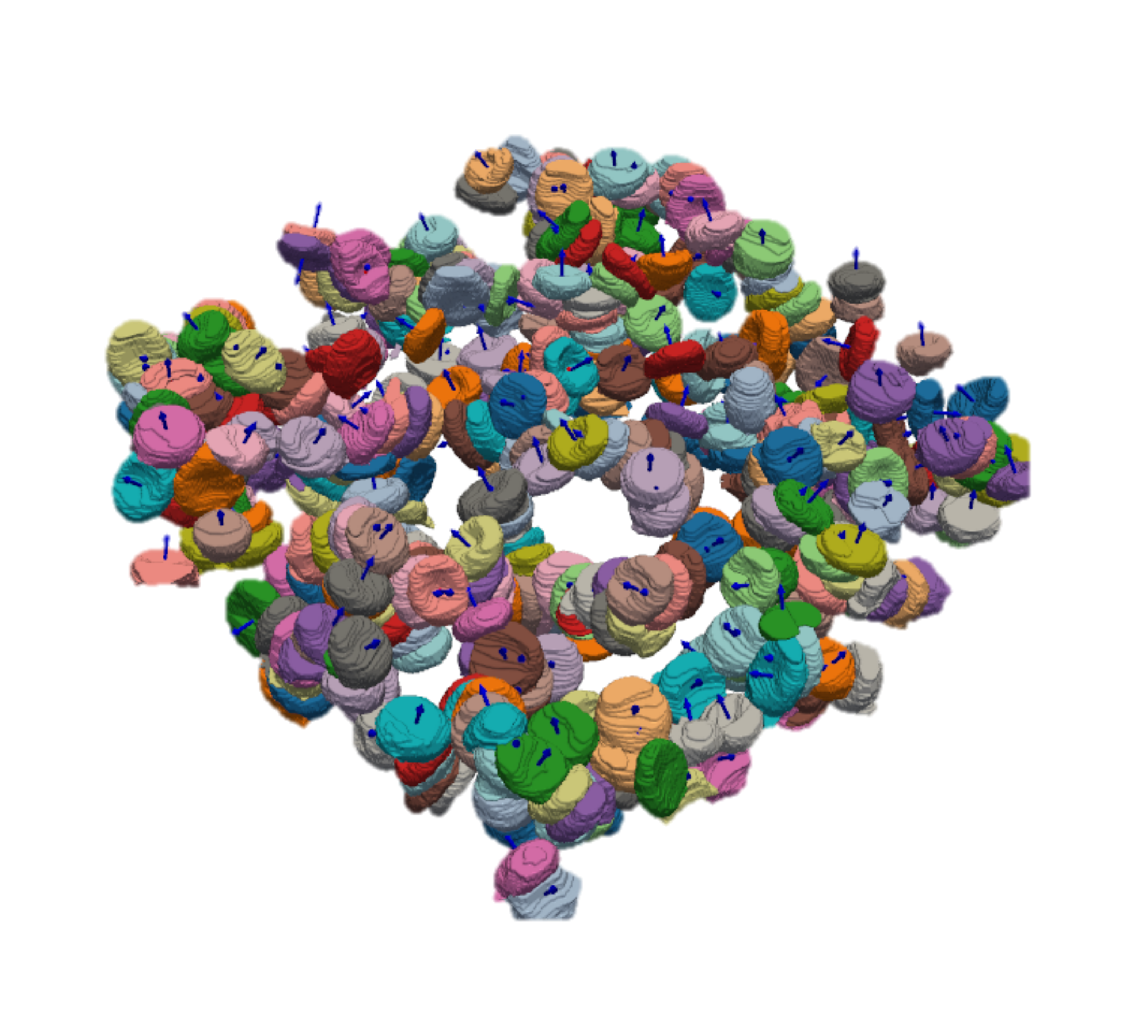
Aggregation, gels and optical tweezers
Ongoing work bridges single-cell adhesion to the collective: optical-tweezers force measurements of cell-to-cell attraction feed a pair-interaction potential and a percolation picture of blood as a gel.
Ongoing, with K. Korneev and C. Haessig, AG Wagner. 3D reconstruction and recording of the cells shown by C. Haessig.
Peer-reviewed articles.
* equal contribution
Rashidi*, Maurer*, Wrublewsky*, Larhrissi, John, Gidley, Toye, Kaestner, Wagner, Laschke, Darras
Biophysical Journal · doi:10.1016/j.bpj.2026.03.023DOI ↗
2025Band pattern formation of erythrocytes in density gradients is due to competing aggregation and net buoyancy
Maurer, Romero, Lerch, John, Kaestner, Wagner, Darras
PNAS 122(51), e2515704122 · doi:10.1073/pnas.2515704122DOI ↗
2025Viscosity and density measurements on the cytosol of human red blood cells
John, Kretsch, Maurer, Recktenwald, Kaestner, Wagner
Biophysical Journal 124(16), 2668-2676 · doi:10.1016/j.bpj.2025.07.002DOI ↗
2025Piezo1 channel activators Yoda1 and Yoda2 in the context of red blood cells
Qiao, Penttinen, Coli, Murciano, Maurer, Wagner, Rotordam, Kaestner
Biomolecules 15(8), 1110 · doi:10.3390/biom15081110DOI ↗
2025Deposit of red blood cells at low concentrations in evaporating droplets is dominated by a central edge growth
Sardari, Mohammadian, Asfia, Maurer, Örüm, Seemann, John, Kaestner, Wagner, Maleki, Darras
J. Colloid Interface Sci. 679(A), 939-946 · doi:10.1016/j.jcis.2024.10.039DOI ↗
2023Adverse effects of Δ⁹-tetrahydrocannabinol on sickle red blood cells
Hatem*, Esperti*, Murciano*, Qiao*, Rotordam, Becker, Nader, Maurer, Pérès, Bouyer, Kaestner, Connes, Egée
American Journal of Hematology 98(12), E383-E386 · doi:10.1002/ajh.27109DOI ↗
2022Continuous Percoll gradient centrifugation of erythrocytes: explanation of cellular bands and compromised age separation
Maurer, John, Makhro, Bogdanova, Minetti, Wagner, Kaestner
Cells 11(8), 1296 · doi:10.3390/cells11081296DOI ↗
2022Red blood cell shape transitions and dynamics in time-dependent capillary flows
Recktenwald*, Graessel*, Maurer, John, Gekle, Wagner
Biophysical Journal 121(1), 23-36 · doi:10.1016/j.bpj.2021.12.009DOI ↗
Additional manuscripts in preparation. Full list on ORCID. Ad hoc reviewer (2023), Scandinavian Journal of Clinical & Laboratory Investigation.
Open code.
Research pipelines and teaching software, all public on github.com/FelixMaurer.
An academic path.
Experimental soft matter / biological physics, AG Wagner · Saarland University.
Saarland University. Thesis: sedimentation of erythrocytes in a colloidal-silica density gradient.
Saarland University. Thesis: statistical analysis of red-cell flow in microchannels.
Saarland University · research & teaching. Funded by a Young Investigator Grant (A. Darras).
AspektEins GmbH · integrated systems, ARM firmware, PCB design (working student).
AG Wagner · microscope control, image analysis, portable optical tweezers.
Red-cell rigidity reshapes in vivo flow and lingering in bifurcations.Read ↗
07 Jan 2026Solving the mystery of “blood-cell stripes”
Aggregation, not age, creates the centrifugation bands. (Saarland University)Read ↗
22 Dec 2025Scientists unravel stripe patterns in nature
University of Bristol & Saarland University on red-cell aggregation.Read ↗
19 Dec 2025Paper published in PNAS
Band pattern formation of erythrocytes in density gradients.Read ↗
Get in touch.
For research collaboration, inquiries, or media requests.
[email protected]
Campus E2 6, Room 320
66123 Saarbrücken, Germany
+49 (0)681 302 – 2977
orcid.org/0000-0002-6459-1204
Responsible for content: Felix Maurer, 66123 Saarbrücken, Germany. Telephone +49 (0)681 302 – 2977, email [email protected].
External links: despite careful content control we assume no liability for the content of external links; the operators of the linked pages are solely responsible for their content.
Online dispute resolution: the European Commission provides a platform at ec.europa.eu/consumers/odr.